List of contents
Do you know the Classification and Morphology of Orchid Plants? Orchids are one of the plants that can beautify a room or environment. In fact, it is not surprising that almost all residents of this community collect orchids.
In general, this orchid plant has various species, from several sources that have been found, there can be tens of thousands of species and they are spread throughout the world.
This orchid plant belongs to the Orchidaceae family and has a curved shape. In fact, this orchid plant has a unique classification.
So, this article will explain the classification of orchid plants and also their morphology. Well, below we have explained the classification and morphology of orchid plants. Following is the discussion.
Also Read: Requirements for Growing Orchid Plants
Orchid Plant Classification
What classification does this orchid plant have? Let’s look at the reviews below together.
- Kingdom – Plantae
- Division – Spermatophyta
- Sub Division – Magnoliophyta
- Kelas – Liliopsida
- Sub Class – Liliidae
- Ordo – Orchidales
- Family – Orchidaceae
- Genus – Dendrobium
- Species – Dendrobium macrophyllum, Dendrobium Lineare, Dendrobium Canaliculatum, Dendrobium Secundum, Dendrobium Bifale.
Morphology of Orchid Plants
The following is the morphology of this orchid plant.
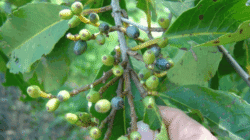
1. Fruit
The shape of the fruit of this orchid plant varies, meaning it only depends on the type of orchid plant.
Capsuar orchids or lanterns have six ribs and three of them are evaporative ribs and the other three are located on the two sides of different flower petals.
Now the fruit of the orchid plant has a yellow to brown color and is small in size. There are even seeds available in large quantities and they are soft and smooth.
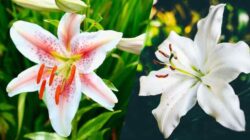
2. Flowers
The flower morphology of this orchid plant is arranged in a bouquet. Please note that the number of flowers in each flower bouquet usually reaches more than one flower.
This orchid flower consists of petals, corolla, stamens, pistils and potential fruit and the petals of this orchid plant usually have three in number.
In general, these orchid flowers have various colors and function to beautify this orchid plant.
In fact, the function of this flower is that it can attract insects to land so that pollination can occur. The monument or collum which is located in the middle of the flower is one of the places for female and male reproductive organs.
3. Leaves
Basically, the leaves of this orchid plant vary in shape, some are oval, some are shaped like an upside-down egg.
This means that the shape of the egg that is upside down like the leaf above is wide while at the base it is smaller compared to the size above.
The thickness of the leaves of this orchid plant also varies, some look thin to fleshy and stiff with a flat appearance. You should know that this orchid leaf does not have a stalk, so the orchid leaf is located directly on the stem of the orchid plant.
The arrangement of the leaves of this orchid plant is also opposite and alternate. Regarding the color of this orchid’s leaves, it has a variety of colors, usually the color of this orchid plant is light green, but often dark green. This just depends on the type.
The edges of the leaves of this orchid plant are not serrated and the tips of the leaves look like they are split. The edge of this leaf is shaped parallel to the leaf vein which ends at the tip of the orchid plant leaf.
The leaves of this orchid plant have colored leaves and veins which can make the orchid plant more attractive.
4. Roots
Orchid roots are cylindrical in shape and have soft flesh and are easy to break. The tip of the root is quite tapered, slightly sticky and slippery.
If this orchid is in dry conditions, the roots will appear silvery white. However, the tips of the roots will still show a slightly purplish green color. Old roots will look dry with a brown color.
The roots of this orchid are usually filamentous, meaning the outer layer consists of various layers of hollow and transparent cells. This aims to protect the roots, because the filament functions as a root protector against water loss during the evapotranspiration process. That way, this will make the orchid plant’s roots stick more closely to the place where it is located.
5. Boy
The stem of this orchid plant has various shapes, some are fleshy and fat all over and some are only in certain parts.
Based on the growth of orchid stems, they can be divided into two types, namely the monopodial type and also the sympodial type.
This monopodial type stem is single and has a growing point. Meanwhile, sympodial type stems are pseudo-tuberous and have various annual segments.
Conclusion
Orchids are plants that belong to the Orchidaceae family and the genus Dendrobium. This plant has many species and produces various colors of flowers, many orchid plants are used in collections to decorate the home or environment.
Orchid plants have small fruit that is yellow to brownish in color. This orchid flower consists of petals, crown, stamens, pistils and fruit candidates. Orchid plant leaves are oval in shape, and some are shaped like an upside-down egg.
Also Read: How to Cultivate Orchid Plants
All content and articles published on DomainJava.com are provided solely for informational and educational purposes. We strive to present accurate, relevant, and useful information, but it is not intended to violate any laws, policies, or guidelines. Any use of the information contained in the article Classification and Morphology of Orchid Plants is entirely the responsibility of the reader.