List of contents
Do you know the Classification and Morphology of Arabian Lotus Plants? The Arabian bidara plant is a plant that can handle extreme temperatures and is able to survive in fairly dry environments.
This plant is an exotic plant which is said to only grow well on the island of Sumbawa, while in other areas the existence of this plant is virtually nonexistent.
The quality of the fruit of this plant will be best if it is grown in a fairly hot, open air and dry environment. However, there should be a rainy season which will support growth and flowering.
Ideally, the soil has enough moisture to ripen the fruit. If the weather is bad enough, the bidara tree will die. In its natural habitat, annual rainfall ranges between around 125 mm and above 2,000m.
Will grow quite well at the lowest rainfall of around 300-400 mm per year. The maximum temperature is 37-48° C, and the minimum temperature is 7-13° C,
Classification of Arabian Lotus Plants
- Kingdom : Plantae (Plants)
- Subkingdom : Tracheobionta (Vascular plants)
- Super Division: Spermatophyta (Produces seeds)
- Division: Magnoliophyta (flowering plants)
- Class : Magnoliopsida (two pieces / dicotyledon)
- Sub Class: Rosidae
- Ordo : Rhamnales
- Family: Rhamnaceae
- Genus : Ziziphus
- Species : Ziziphus mauritiana Lamk
Arab Bidara Plant Morphology
1. Leaves (folium)
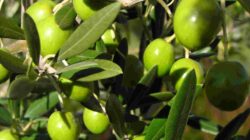
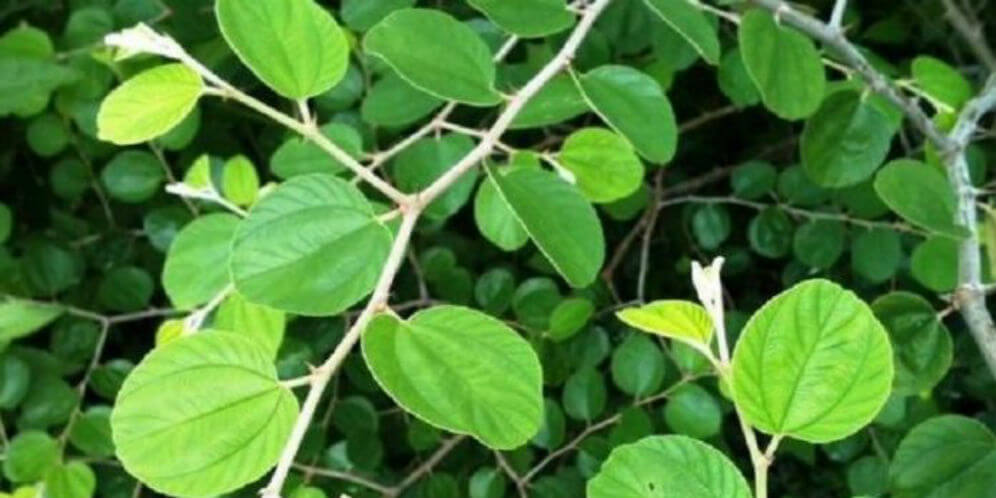
The leaves of this plant are the most important organs that will be seen in every plant. The leaves of the Arabic bidara plant are included in the compound leaf type.
This compound leaf has a branched stem and on the branch of the stem there is a sheet of leaf, and on one stem there will be more than one sheet of leaf.
A compound leaf originates from a single leaf so that the parts of the leaf between the notches appear separate from one another.
Each is a small sheet of its own. The leaves of this Arabic plant are also included in incomplete leaves because they only have stalks and leaf blades or do not have midribs. The Bidara plant has smooth leaves and is said not to be scratched.
2. Flowers (Flos)
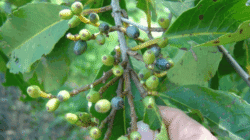
The flowers of this plant are the female genital organs of the plant. On this bidara plant, the flowers grow in the leaf axils, are shaped like a forked umbrella, are about 1-2 cm long, and are composed of 7-20 flowers.
The inflorescence stalk is about 2-3 mm long and 2-3 mm in diameter, has a yellowish color. Quite fragrant, the flower stalk is 3-8 mm long, the petals are 5-lobed, delta-shaped, and the outside looks hairy.
The inside looks bare, this type of bidara plant flower is a single flower, meaning it can only produce one flower.
Where these flowers will form inflorescences but consist of a single flower, the inflorescences on bidara fruit can be counted as meaning they are classified as bordered flowers.
3. Buah (Fruit)
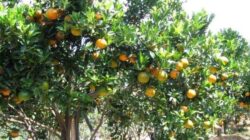
The fruit on the Arabian bidara plant emerges from a single flower or emerges from the fruit ovary. This plant is also included in a true or single fruit. The fruit has one type of fruit, round to egg-shaped and can reach a size of around 6cm x 4cm for the bidara that is usually cultivated.
In general, it looks much smaller, for wild ones the skin of the fruit is smooth or rough, shiny, thin but quite tough, has a yellowish to reddish or blackish color.
The white flesh of this plant contains a lot of fruit juice. The taste is slightly sour to sweet to make it rich on fully ripe fruit. The seeds appear to be located in a bumpy and irregularly grooved shell containing between 1 to 2 brown seed nuclei.
4. Stem (Caulis)
The stem of the Arabian bidara plant is the most important part of the plant body and considering the location and position of the stem for plants, the stem can be compared to the axis of the plant.
In this bidara plant, the stem shape is round or terraced and woody, then the shape of the branches is monopodial. The main trunk is clearly visible because it is bigger and longer than the branches.
5. Will (radix)
Roots are another main part of a plant besides stems and leaves. For plants whose bodies are already a corpus.
The roots of this bidara tree are found in the soil which direction of growth is towards the center of the earth or towards the water. Leaving air and light, not lumpy or not branched and not supporting leaves or other parts and the shape is pointed.
This bidara tree has fibrous roots, namely institutional roots that develop and then die or are followed by a number of roots that are more or less the same size and all emerge from the base of the trunk.
Conclusion
Arabian bidara is a plant that belongs to the Rhamnaceae family with the Latin name Ziziphus mauritiana Lamk. This plant is unique in that it is able to survive extreme weather in hot and quite dry areas.
The leaves of the Arabian bidara are compound leaves and this plant has smooth leaves, the flowers of this plant grow in the axils of the leaves with a shape like a forked umbrella, the fruit is a single fruit with a round to ovoid shape, the stem of this plant is woody with a round shape, this Arabian bidara plant has fibrous roots.
This is the classification and morphology of the Arabian bidara plant that you can find out about. If you are interested in cultivating it, then you really should know about the discussion this time.
Read Also: Conditions for Growing Arab Bidara Plants
All content and articles published on DomainJava.com are provided solely for informational and educational purposes. We strive to present accurate, relevant, and useful information, but it is not intended to violate any laws, policies, or guidelines. Any use of the information contained in the article Classification and Morphology of Arabian Lotus Plants is entirely the responsibility of the reader.