List of contents
Do you know the Classification and Morphology of the Keji Beling Plant? In the local language Kejibeling is known as keci beling in Java and picah beling in Sunda. The vile shard plant or Strobilanthes crispus is a herbaceous plant that is usually planted by people as a hedge plant. This plant can grow almost throughout Indonesia.
From various kinds of research, it is known that this vile glass plant contains chemical substances. Among these chemicals include potassium, sodium, calcium, silicic acid, alkaloids, saponins, flavonoids and polylenoids.
This plant has a lot of minerals such as potassium, calcium, and sodium as well as other mineral elements. In addition to that there is also silicic acid, tannins, and glycosides.
This potassium is known to function to facilitate urine and to destroy stones in the gallbladder, kidneys and bladder. Sodium is known to function to increase extracellular fluid which causes an increase in blood volume.
Calcium functions to help the process of blood clotting, as well as a catalyst for various biological processes in the body and maintains the function of cell membranes. Meanwhile, silicic acid is known to function to bind water, oil and various other non-polar compounds.
This plant is also known as a wild herbaceous plant that lives for years. This plant is known to have many health benefits in curing various diseases.
Classification of Abominable Plants
- Division: Spermatophyta
- Sub division: Angiosperms
- Class: Dicotyledoneae
- Nation: Scrophulariales
- Family: Acanthaceae
- Genus: Strobilanthes
- Type: Strobilanthes crispa Bl.
- Common name: Keji beling
Morphology of Keji Beling Plants
The habitus of this vile shard plant is a bush, the height of this plant is around 1-2 m. The stem of this plant is segmented, round, has rough hairs, monopodial branching, green. This vile shard plant has a segmented stem, the shape of the stem is round with a plant that has a diameter of between 0.12 to 0.7 cm, has coarse hair and has monopodial branches.
The bark of this plant is purple with green spots when it is young and will turn brown when it is old.
The shape of the leaves of this plant is single, opposite, lanceolate or oval, the edges are serrated, the tip looks tapered. The base of this plant is pointed, about 9-18 cm long and 3-8 cm wide. It has a short stalk, the bones are pinnate, green.
Classified as a type of single leaf, opposite, the shape of the leaves is ovate to oval. The surface of the leaves has fine hairs, the edges of the leaves look serrated. The tip of the leaf looks tapered and the base of the leaf is pointed, the length of the leaf blade ranges from around ± 5 – 8 cm, width ± 2 – 5 cm.
It has short stalks, pinnate leaf veins, and the color of the leaf surface on the top is dark green while on the bottom it is light green.
The flowers of this plant are compound, spike-shaped, funnel-shaped crown, hairy, purple in color. From the petals you can see short, yellow hair, 4 stamens, white and yellow.
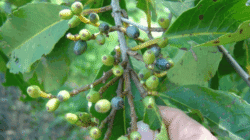
The fruit of this vile shard plant is round and brown in color. The seeds are also round, small, flat and brown in color. The roots of this plant are long, light brown in color. The Kejibeling plant or Sericocalyx crispus L is easy to reproduce in fertile soil, somewhat sheltered and in open areas.
The flowers of this plant are classified as compound flowers, in the form of grains, the flower corolla is funnel-shaped, 4 stamens and the color of the flowers is slightly yellowish white.
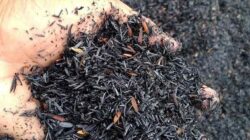
Keji beling has a round fruit, the fruit when young will be green and when old or ripe it will be black. For the seeds are round and small in size.
The root system of this plant is riding, the shape of the roots is like a spear, and has a white color. This plant can live in areas with ecological conditions with the following conditions:
- The vile beling plant lives at an altitude of around 1 m – 1,000 m above sea level with annual rainfall of around 2,500 mm – 4,000 mm/year
- For wet climates, namely above 100 mm/month 8 months – 9 months,
- For dry climates, namely below 60 mm/month for 3 months – 4 months,
- Live in an air temperature of around 200 C – 250 C with moderate humidity
- Medium exposure
- The soil texture is sandy to clayey,
- Drainage is moderate to good,
- The depth of ground water is about 25 cm from the ground surface,
- Rooting depth is around 5 cm from the soil surface, acidity (pH) is around 5.5 – 7, medium fertility.
This vile shard plant is classified as a shrub, usually living in clusters, about 1-2 meters high in mature plants.
The Keji shard plant is a plant that people usually plant as a hedge, and can grow in almost all parts of Indonesia.
Conclusion
Keji shard is a plant that belongs to the Achantaceae family. This plant can live throughout Indonesia and is widely used as a hedge plant. Apart from that, this plant also contains minerals and chemicals that can be used to cure diseases.
This plant has a taproot, this plant has a round and segmented stem, the leaves of this plant are single leaves with a lanceolate or oval shape, the keji shard flower is a compound flower in the shape of a spike, the fruit of the keji shard plant is round and brown in color.
This is the classification and morphology of the vile shard plant that you can find out about. If you want to cultivate this plant, you must know this first.
Also Read: Conditions for Growing Keji Beling Plants
All content and articles published on DomainJava.com are provided solely for informational and educational purposes. We strive to present accurate, relevant, and useful information, but it is not intended to violate any laws, policies, or guidelines. Any use of the information contained in the article Classification and Morphology of Keji Beling Plants is entirely the responsibility of the reader.