List of contents
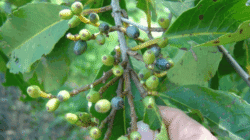
Grapes are a type of fruit plant that is widely cultivated in Indonesia. Apparently, this plant can grow well because the soil is suitable. The problem is that this plant is easily attacked by pests.
In order for grapes to grow well, make sure that this plant is not attacked by pests or diseases.
The way to do this is by exercising proper control. Well, below we will explain the types of grape plant pests and how to control them.
Also Read: How to Cultivate Grapes
Types and Methods of Controlling Grape Pests
Grape plants are susceptible to attack by pests and diseases. Therefore, care must be maximum and carried out with discipline.
The most important thing is that farmers should know the types of pests so that treatment actions are more accurate. Here are the Types and Methods of Controlling Grape Plant Pests in question:
1. Armyworm
The first type of grape plant pest is the armyworm. This is a type of local caterpillar that likes to attack plant leaves. Usually, if these caterpillars attack the leaves, they will become hollow and bare.
Apart from that, Armyworms also inhibit plant growth. Sometimes plants don’t die. But to bear fruit is very slow so it takes a long time.
There are three important ways to control armyworms:
- The first is to keep the garden clean. Because from a dirty garden these larvae, maggots and small caterpillars will emerge.
- The second is to prune the leaves and branches of the tree. This means that the plants are not too dense. Because this is what causes the appearance of caterpillars.
- Meanwhile, the third way is to spray regen type insecticide.
2. Return to the phiyyyraejjre.
Phylloxera bugs are pests that cause grape plants to die. Usually this pest attacks the leaves and roots. Therefore, if these small lice are present, the plant roots will be damaged.
The characteristics of grape plants being attacked by Phylloxera lice are small spots appearing on the leaves. The shape is like a wart with a brownish white color.
Apart from that, the roots look swollen and each segment has the same spots.
The control methods that must be carried out are as follows:
- For Philloxera fleas, please control them by practicing good sanitation.
- Don’t forget to sprinkle curater nematocide on the plant roots.
- The next step is to spray insecticide. Usually those used are those containing barnex and numectin.
- Don’t forget to trim the leaves of the plant so it doesn’t get too dense.
3. Grape Fruit Moth
The next grape plant disease is the grape moth. This pest is a larva that attacks flowers and fruit. The effect is that both grow abnormally.
This moth, which has the scientific name Paralobesia Viteanea, only attacks grape plants and nothing else. Therefore, special measures must be taken to control it.
Several ways that must be done to deal with this pest are:
- Try treating it by spraying the insecticide abamectin. If not available, it can be replaced with Alfamer or Bannex.
- This control method can be combined with maintaining garden cleanliness. Ideal sanitation measures are also very necessary to be carried out.
4. Termites
Termites are a very popular plant pest. In fact, this small animal not only attacks fruit plants but also staple crops such as corn and secondary crops.
Termites usually attack plant roots and stems. This animal will eat it so that burrows are formed which damage the stems and roots. If not treated immediately, the plant can die.
Several things that must be considered when dealing with termites are:
- Overcome it with good control. One way is by spraying nematocide.
- Please use nematocides of the type curater, pentakur, petrofur or furadan. However, make sure that when spraying it onto the stem, first dissolve the nematocide above in water.
5. Red Mite
The last grape plant pest is the red mite. This is a plant disease that often attacks grape leaves. Usually, if the leaves are eaten by these animals, they will become smaller and drier.
The characteristics of leaves attacked by red mites are that there are yellow spots on the surface. In fact, the yellow spots are the effect of the leaf water running out due to being sucked in by pests.
For red mite pests, control is different and specifically includes:
- Usually farmers use insecticide sprays that contain active chemicals such as abamectin. However, to do this, make sure the levels are known. Because this material has the potential to overheat plants, which is at risk of death. Therefore, ask an expert first before carrying out control.
Types and Methods of Controlling Grape Plant Diseases
Apart from grape plant pests, what can cause serious disruption to growth and development is disease.
Well, below is a complete explanation of the types and methods of controlling grape plant diseases:
1. Downy mildew
The first disease that is caused is false powdery mildew where the initial symptoms that the plant receives are on the surface of the leaves with the appearance of spots that have a slightly yellowish color.
Then it spreads to become light to dark brown spots, causing the leaves to dry and fall.
If this fungal disease attacks young fruit, the fruit will rot.
However, this attack usually occurs on large fruit and can cause defects in the fruit in the form of brown, rusty spots.
This disease is one of the main diseases of grape plants.
The control methods that can be carried out are as follows:
- This can be done by collecting and burning infected leaves, twigs, fruit, thus reducing garden humidity and also the spread of false flour
- Provide a fungicide that has the active ingredient + carbendazim at a concentration of 0.2% or around 2 grams per liter of water.
2. Powdery mildew
The symptoms caused by this powdery mildew are that at the growth stage, the leaves, twigs and fruit have spots and are powdery and have a gray-white color and can extend to the top of the leaves.
If this continues, the leaves may become dry and then curl upwards with a powdery gray color and then turn black or dark.
Infected plants gradually become wilted and stunted and eventually die.
Then how to control this powdery mildew disease, here is the explanation:
- Infested or diseased plant parts are cut and destroyed, either by burning or by landfilling.
- Handled with sulfur flour or California porridge
3. Dry rot disease (Red fire disease)
The symptoms caused are spots that first appear on the underside of the leaves, then spread irregularly to form concentric circles, then the color also changes to brown with the edges yellow.
If the dry rot disease attack is high or continues, the leaves will dry out and curl like they have been exposed to the sun.
Some ways that can be done to control it are:
- Carrying out garden sanitation is by burning plant parts affected by this disease or burying them in the ground
- Reducing garden humidity is by picking leaves that are no longer productive
- Spraying with fungicide
4. Gray mold rot (Gay mold rot)
Symptoms caused by this gray mold rot disease are that the lower surface of the fruit is affected so that the skin slowly peels, the fruit wrinkles brown.
Under certain conditions, for example humid weather, it can turn gray like flour.
Several things that farmers can do to control this type of disease are:
- Pruning leaves or twigs that are no longer productive aims to improve air circulation around the plant
- Provide fungicide
- After harvesting the fruit is stored in a cool or cool place with a temperature of around -0.5 – 0 degrees Celsius
That’s the review we can provide regarding 9 types and methods of controlling grape plant pests and diseases. Hope it is useful.
All content and articles published on DomainJava.com are provided solely for informational and educational purposes. We strive to present accurate, relevant, and useful information, but it is not intended to violate any laws, policies, or guidelines. Any use of the information contained in the article 9 Types and Ways to Control Grape Pests and Diseases is entirely the responsibility of the reader.