List of contents
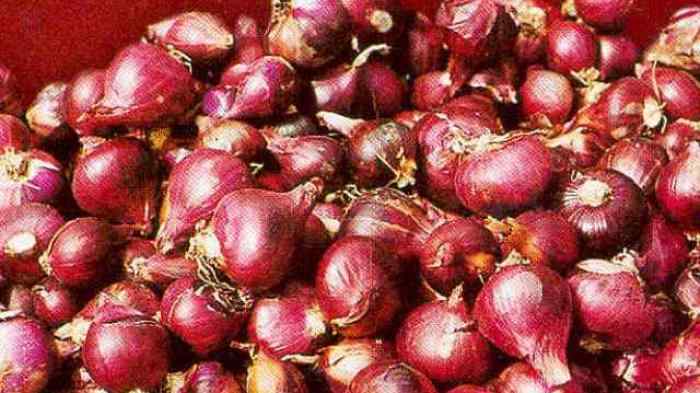
Shallots have the Latin name Allium cepa var ascalonicum (L) Back being one of the most important commodities in society, they can be found in the highlands to the lowlands well.
The type of soil that is good for cultivating shallots is alluvial soil, latosol association – andosol and andisol, glei humus, and latosol.
Considering that the need for shallots is very large, the Agricultural Research and Development Agency is carrying out extensive development of shallot cultivation land, one of which is using peat land.
Also Read: Requirements for Growing Red Onion Plants
Types of Shallot Varieties That Are Good in Peat Soil
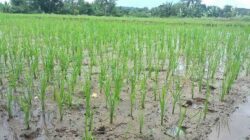
They carried out this trial on gamut land in Plangkaraya with an area of 2000 square meters when the rainy season entered.
After conducting experiments, here are several types of shallot varieties that are good in peat soil:
1. Sembrani variety
This is a variety of shallot that can be harvested 54 – 56 days after planting with quite high production of around 23 – 24.4 tons / ha of dry tubers after losing 25.45% of the wet weight of the tubers.
It has leaves with a cylindrical shape and slightly flattened in the middle which are green in color. The tubers are round and the neck is quite large with a pale red color.
Sembrani varieties are tolerant to disease and pests, they are suitable for cultivation on peatlands that have a wet climate or high rainfall.
This variety has the highest production yield of several varieties and is capable of producing around 18.7 tonnes/ha of wet tubers when tested on Palangkaraya peatlands when the rainy season arrives.
2. Cipanas manja variety
This is a variety that comes from local Cipanas and begins to flower when it reaches 50 days after planting and harvests when it reaches 60 days.
It has a height of around 24.3 – 43.7 cm with a number of tubers of 6 – 12 per clump which are dark red and have a bulbous shape.
The leaves have a hollow, cylindrical shape which is dark green in color with around 16 – 49 pieces.
The Manja Cipanas variety is quite easy to flower with a white color and is shaped like an umbrella, numbering 100 – 130.
The fruit produced per stalk is 60 – 100. It has a number of stalks per cluster of 2 – 7, has flat, round seeds and is wrinkled and black in color.
Produces 10.9 tons / ha of dry tubers after shrinking 24.90% of wet tubers.
They are resistant to root rot attacks or Botrytis Ali and is sensitive to Tip Rot or Phytophthora pori. Planting is suitable for high and lowlands.
3. Bima Brebes variety
This is a variety of shallots originating from Brebes and is ready to harvest when it is 60 days after planting and produces around 10 tonnes/ha of dry bulbs after 22% loss of wet bulbs.
It has cylindrical green leaves with holes. The bulbs of this variety of red onion are oval in shape and pink in color and have a small ring at the neck of the disc.
Being one of the varieties that is resistant to tuber rot disease or Botrytis Allii and sensitive to Usu leaves or Phytophthora pori. They are very suitable for planting in the lowlands.
4. Trident varieties
This is a type of shallot that can be harvested 55 days after planting.
Has a potential yield of 6.5 – 23.21 tons / ha and is able to survive for 5 months under normal conditions. Has resistance to rain and disease.
This variety was created as a result of research by the Ministry of Agriculture, considering that agricultural productivity has decreased due to weather problems. They have the same shape as red onions in general.
That’s what I can share on this occasion regarding the types of shallot varieties that are good for peat soil. Hope it is useful.
All content and articles published on DomainJava.com are provided solely for informational and educational purposes. We strive to present accurate, relevant, and useful information, but it is not intended to violate any laws, policies, or guidelines. Any use of the information contained in the article Types of Shallot Varieties That Are Good in Peat Soil is entirely the responsibility of the reader.