List of contents
Types and methods of controlling durian pests and diseases need to be done early. At the very least, farmers and gardeners must know what types and ways to control fruit diseases. That is if you want an abundant harvest this year.
So, for this reason, below we will explain how to control pests and diseases of durian plants. However, first we will explain what the types of pests are.
Also Read: How to Cultivate Durian Plants
Types and Methods of Controlling Durian Plant Pests
Every fruit must have pests that can disturb it. These must be destroyed so as not to cause the plant to die. Here are the Types and Methods of Controlling Durian Plant Pests:
1. Hama Gala Gala
The Gaga gala pest is a durian plant pest which is classified as a fruit borer.
Usually these insects damage seeds and fruit by making holes in them. After the fruit had a hole in it, he used it as a place for a while.
Therefore, the characteristics of fruit that is attacked by this pest are that there are holes around the surface of the fruit and when it is cut open there is some kind of small animal inside.
If this is not treated immediately, the fruit will usually dry out and then fall. As a result, the harvest can fail because not a single fruit can be picked.
Control methods that can be carried out are as follows:
- Spraying special insecticide. Usually the substances used are Basudin and Sumithion types. Meanwhile, the appropriate level is only 2-3 cc/liter. Because if it is too big, you are worried that the plant stem will experience over-hating. This can also cause plants to wilt and die.
2. Flower Drive Pests
The second durian pest is the flower borer. Usually this attacks prospective fruit and flower buds.
One of the characteristics of plants attacked by these caterpillars is that there are many flower buds that are damaged and falling.
If this has happened, it is better to do a pest cleanup. So that it doesn’t spread to other, healthier flowers. Because if the fruit ovary is damaged, of course fruit growth will be hampered.
Apart from attacking flowers, these green caterpillars also often attack the stamens. There are quite a lot of cases and it is considered a very stubborn pest.
Control methods that must be carried out are:
- For flower borer pests, please spray nuvacrom and perfection. These two substances are considered effective for treating stubborn flower borer pests.
3. Stem Borer Pests
The next durian plant pest is the stem borer. This is a unique pest. Because what is used as a tool to damage the stem is the dung.
This stem borer pest will stick its feces or excrement to the stem.
Eventually the durian plant stems wilt and dry. If left for a long time without control, the stem will certainly die.
Stem borers are also durian plant pests that you need to watch out for. Because the effect of this animal’s attack is very fast. Sometimes, now it is attacked the next day the stems are wilted.
Control methods that can be used by durian growers are:
- Using chemicals. Usually gardeners use Tamaron substance. If there is none, then use the substance Dianizon. Make sure the dose is right. Please spray this active substance at a dose of less than 0.5%. If this control method is carried out correctly, the pests will usually disappear immediately. However, if the control measures are not taken seriously, the effect will not be optimal.
4. Durian Jumping Flea
Durian psyllids are also durian plant pests that need to be controlled seriously.
Because this animal has the potential to cause planters to fail in their harvest due to the large number of damaged fruits.
Usually durian psyllids attack young leaves and fruit.
This animal will suck the minerals in it. A few moments later the leaves will wilt and dry. If not controlled the leaves will fall.
Control methods that can be carried out are as follows:
- Perform plant sanitation.
- Apart from that, the leaves of the durian plant must be pruned frequently. Because if it is too dense, it will make it easy for pests to hide and attack. Therefore, take good care of the plants.
- If the pests have already attacked, please spray the Supracide type insecticide. Use a dose of 100-150 grams for 5 liters of water only. Because if you overdo it, it is feared that the plants will wilt because of the heat.
Types and Methods of Controlling Durian Plant Diseases
Plant disease is one of the things that must be avoided when cultivating, especially durian plants.
The following are the types and methods of controlling durian plant diseases that must be considered and controlled, namely:
1. Root rot
This disease has symptoms of necrotic spots appearing on the lateral roots starting at the tip of the root.
When the attack is high, there are dead ends of durian plants on the surface of the ground.
If this is left then it will grow to the branch below it then the leaves will wither and end with the leaf falling and the death of the durian.
Control methods that can be carried out include:
- When maintaining plants, try to avoid injury to the roots and base of the durian plant stem.
- Dismantle the affected plants and then destroy them by burning them or burying them in another place so that they do not spread to other plants.
- Improve drainage, so that the soil has moderate humidity in accordance with the requirements for growing durian plants.
- Make sure you use rootstock that is resistant to root rot.
- Use systemic fungicides if the attack is in the high category. The administration can be poured onto plants or also infused into the roots.
2. Phytopthora parasitica dan including Pythium
This disease is a type of parasite that attacks durian plants, especially the Musang King durian.
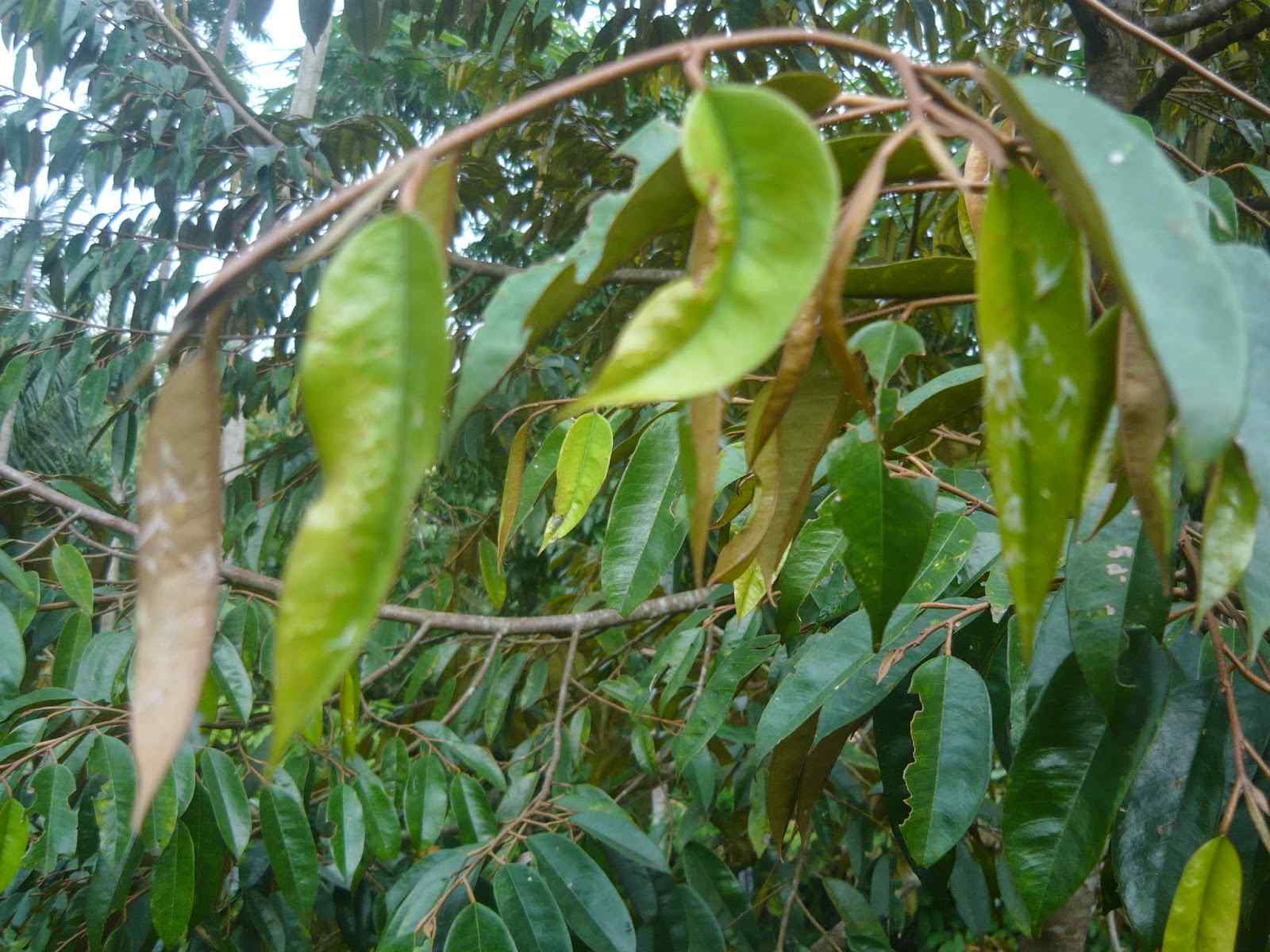
The symptoms of the attack are that the affected durian leaves change color to yellow and then fall off.
If the attack continues, the parts of the plant that are attacked at the ends will slowly die followed by the development of shoots on the branches below.
On the skin of plants that are on the surface of the soil turn brown and end up rotting.
Rotting also occurs in the roots. Not only in the roots at the bottom but also in the lateral roots, so if this continues it can cause death of the durian plant.
Control methods that can be carried out include:
- Plants infected with this disease are dismantled and the roots are burned or buried in another area so that it does not spread to other plants.
- Choose durian seeds that are resistant to fungal attacks so you can avoid this rotten disease.
- Make good drainage so that the soil is not too wet because this disease will increase if the humidity level is also higher.
3. Upas Mushroom
This type of disease attacks the branches of the plant. Meanwhile, the symptoms caused by the Upas fungus are that the branches or bark of the durian have threads like spider webs.
Then if it continues, the fungus will grow and have a pink color, slowly entering the skin. This can cause death of the branch.
Control methods that can be carried out are:
- By spraying with chemicals such as Antrocol 70 WP using a dose of around 100-200 grams/liter of water or 1-1.5 kg/ha application
- Lubricate or water the affected area with a fungicide, for example calizin RM. This can be done if the fungal attack is still at a level like a spider’s web.
- When the Upas fungus has formed a pink crust, it would be better to cut the branches and then burn or bury them.
4. Leaf Spot
Symptoms on durian plants are the appearance of small spots on the leaves and they become wider as the days go by, then the leaves will dry out and abort.
Control methods that can be carried out include:
- By destroying or cutting the affected parts of the durian plant and then burning them.
- Maintain the planting distance, meaning not too close so that if a plant is affected by this leaf spot, it does not immediately spread to other plants.
- If this disease persists and the attack is high then spray it with a fungicide that has the active ingredient copper.
- Water regularly from seedlings to flowering period.
5. Stem Cancer
Stem cancer is a disease that often attacks durian plants with signs of drying and peeling stems measuring around 5 to 20 cm.
If the stems peel, it will cause some of the leaves to turn yellow and end up falling off.
If there is a high attack, the skin will peel off around the stem of the plant, this will cause the durian plant to die quickly.
Control methods that can be carried out include:
- Set the planting distance between one plant and another.
- Cleaning the planting area or in other words garden sanitation.
- From the beginning of planting, spread Natural GLIO or apply it to the injured part of the stem, then cover it using paraffin.
- Scrape the affected stems until they are brown then spray using Pestona + NASA POC
- Controlling weeds.
- The pruning process is carried out so that it is not too overgrown and causes high humidity.
6 Rotten Fruit
The last disease is fruit rot. This disease is caused by the fungus Phytophthora sp.
The symptoms that arise start from the presence of wet spots that have a blackish brown color on the skin of the fruit, if this continues the fruit will become rotten.
Control methods that can be carried out are:
- Carry out cleaning in the plant area or in terms of sanitation.
- Using Natural GLIO before the planting process is carried out for early prevention.
This is our discussion this time about 10 types and ways to control pests and diseases of Durian plants. Hopefully it can help durian farmers in Indonesia.
All content and articles published on DomainJava.com are provided solely for informational and educational purposes. We strive to present accurate, relevant, and useful information, but it is not intended to violate any laws, policies, or guidelines. Any use of the information contained in the article 10 Types and Ways to Control Pests and Diseases of Durian Plants is entirely the responsibility of the reader.